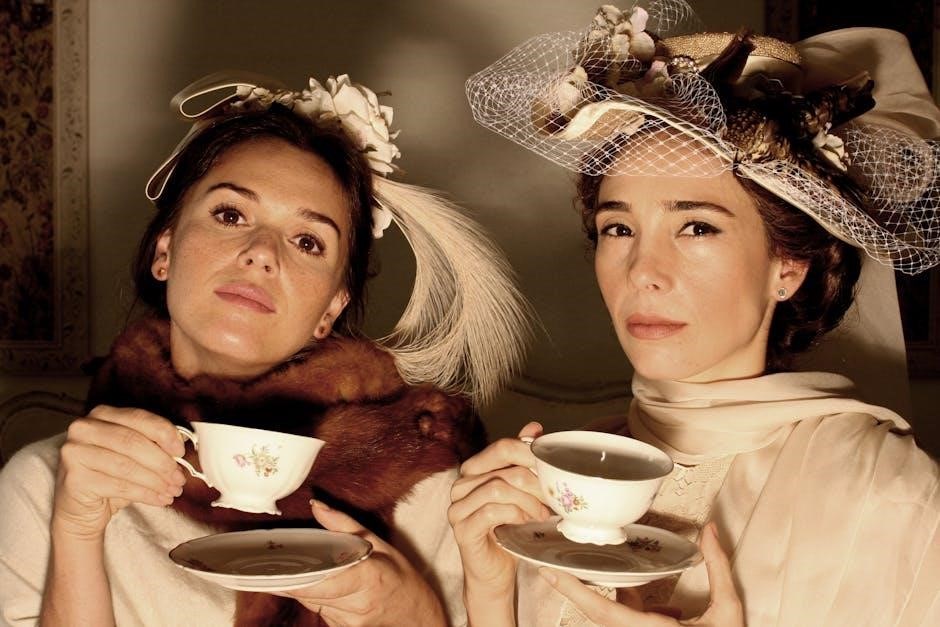
Mackenzi Lees’s 2018 novel blends historical fantasy, romance, and adventure, captivating readers with its unique premise. It echoes “The Last Magician”’s atmospheric style.
Overview of the Novel
“The Lady’s Guide to Petticoats and Piracy” presents a compelling narrative where societal expectations clash with a heroine’s hidden life. The story follows Elizabeth “Lizzie” Croft, navigating 18th-century England and Colonial America, concealing a daring secret. She’s drawn into a world of naval warfare and piracy, encountering Captain James “Jamie” Harding.
The novel masterfully interweaves romance, adventure, and social commentary, challenging norms surrounding honour and reputation – as explored in Andrea Branchi’s work. It’s a historical fantasy reminiscent of “The Last Magician”, offering a thrilling escape into a bygone era filled with both petticoats and plunder.
Historical Context: 18th-Century England & Colonial America
The novel is deeply rooted in the 18th century, a period defined by rigid social hierarchies and burgeoning colonial expansion. England’s societal norms heavily dictated female roles, contrasting sharply with the freedom – and danger – of pirate life. Colonial America provided a backdrop of opportunity and conflict, fueling the Golden Age of Piracy.
This era witnessed significant naval warfare and complex trade routes, influencing the story’s setting. The author skillfully incorporates these historical elements, creating an immersive world where petticoats symbolize societal constraints and piracy represents rebellion.

Character Analysis
The narrative centers on Elizabeth Croft and Captain Jamie Harding, whose contrasting worlds collide. Supporting characters enrich the plot, each playing a vital role in their journeys.
Elizabeth “Lizzie” Croft: A Lady with a Secret
Lizzie Croft defies 18th-century expectations, concealing a daring spirit beneath a facade of societal grace. She navigates a world of restrictive norms, harboring ambitions beyond the conventional path laid out for women of her station. Her journey embodies female empowerment and agency, challenging the limitations imposed upon her.
Lizzie’s internal conflict stems from a desire for freedom and adventure, juxtaposed against her duty to family and reputation. This duality fuels her decisions and shapes her interactions, particularly with Captain Harding. She represents a rebellion against the cumbersome dresses and bothersome hooks of the era.
Captain James “Jamie” Harding: The Pirate’s Charm
Captain Jamie Harding embodies the romanticized yet realistic portrayal of a pirate during the Golden Age of Piracy. He possesses a captivating charm that belies a life lived outside the bounds of societal law and order. Harding’s character explores themes of honour and reputation, questioning conventional morality within a lawless world.
His interactions with Lizzie Croft challenge both their preconceived notions, sparking a dynamic that blends danger and desire. He represents a life of adventure, contrasting sharply with Lizzie’s constrained existence, yet offering a path towards liberation.
Supporting Characters and Their Roles
The novel features a diverse cast enriching the narrative beyond Lizzie and Jamie. These characters illuminate the societal norms and colonial landscapes of the 18th century. Their roles often serve to highlight the critique of societal expectations and the complexities of honour, as explored through Andrea Branchi’s work.
Supporting figures contribute to plot twists and character development, mirroring the broader historical context. They represent various social classes and perspectives, adding depth to the world of petticoats and piracy, and showcasing the era’s intricate power dynamics.
Themes Explored in the Novel
The story delves into female empowerment, social class, and the conflict between duty and desire, challenging norms and exploring honour within a historical setting.
Female Empowerment and Agency
Elizabeth Croft’s journey embodies a powerful rejection of 18th-century societal constraints. She navigates a world designed to limit women, actively seizing control of her destiny. The novel portrays a departure from expected feminine roles, symbolized by discarding “cumbersome dresses.”
Lizzie’s agency isn’t simply about rebellion; it’s about defining her own honour and reputation. This exploration, linked to Andrea Branchi’s work on honour, showcases a woman challenging expectations and forging her path, demonstrating strength beyond traditional “petticoats” and societal norms.
Social Class and Expectations
“The Lady’s Guide to Petticoats and Piracy” sharply contrasts the rigid social hierarchy of 18th-century England and Colonial America. Elizabeth Croft’s world is defined by expectations based on birth and gender, creating inherent limitations. The narrative explores how these structures impact individual choices and freedoms.
The novel subtly critiques these norms, highlighting the disparities and injustices of the era. Characters navigate a system where reputation and honour are paramount, yet easily manipulated by class distinctions, prompting questions about societal values and fairness.
Duty vs. Desire
A central conflict within “The Lady’s Guide to Petticoats and Piracy” revolves around the tension between societal duty and personal desire. Elizabeth Croft grapples with expectations of a proper lady versus her burgeoning adventurous spirit and attraction to Captain Jamie Harding.
This internal struggle fuels the narrative, forcing Lizzie to question her prescribed path. The novel explores the consequences of prioritizing either obligation or passion, examining the sacrifices made when aligning with or rebelling against societal norms, ultimately defining her agency.
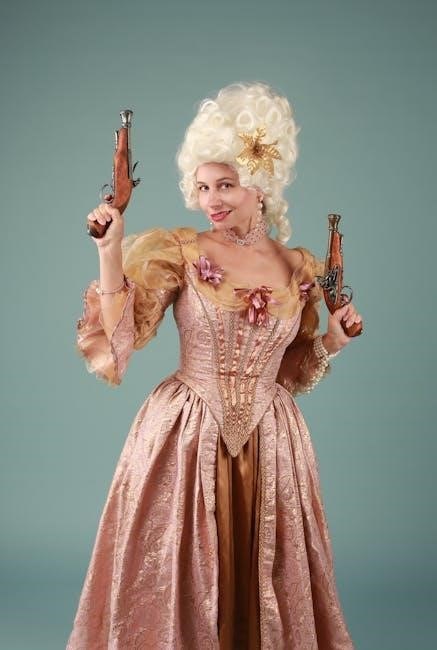
The World of Petticoats
18th-century petticoats were far more than undergarments; they signified fashion, status, and even rebellion. Lace adorned these crucial layers, as detailed on page 124.
The Significance of Fashion in the 18th Century
Fashion in the 18th century was a powerful language, communicating social standing, wealth, and adherence to – or defiance of – societal norms. Goodbye to cumbersome dresses with bothersome hooks! Clothing wasn’t merely practical; it was a carefully constructed performance.
For women, specifically, attire dictated acceptable behavior and reinforced expectations. However, subtle alterations, like the style or embellishment of a petticoat, could express individuality. The era saw a shift, a budding desire for comfort alongside elegance. Fashion choices were intensely scrutinized, impacting reputation and opportunities.
Types of Petticoats: From Function to Fashion
Petticoats evolved significantly throughout the 18th century, transitioning from purely functional undergarments to fashionable statements. Initially, they provided warmth and shape, protecting outer garments from dirt and wear.
Early petticoats were often simple linen or wool. As styles changed, so did petticoats – becoming increasingly elaborate. Multiple layers were common, creating volume and silhouette. Later designs incorporated luxurious fabrics and embellishments, including 101 petticoats adorned with delicate lace, transforming them into visible displays of wealth and status.
Petticoat Construction and Materials (including lace ౼ page 124 reference)
Petticoat construction involved meticulous craftsmanship, utilizing diverse materials. Linen and cotton were staples for everyday wear, while silk and damask signified luxury. Whalebone or cane provided structure, shaping the desired silhouette.
Page 124 highlights the prominent use of lace as a decorative element, adorning hems and panels. The quality of lace indicated social standing. Skilled seamstresses assembled layers, employing techniques like quilting and pleating. Goodbye to cumbersome dresses with bothersome hooks!
The Symbolism of Petticoats: Modesty and Rebellion
Petticoats, outwardly symbols of 18th-century modesty and societal constraints, held a subversive potential. Layers concealed, yet also protected, representing a hidden self. Their voluminous shape dictated movement, limiting freedom, but also offering a space for concealed items – perhaps even a pirate’s blade!
Rejecting restrictive garments signified rebellion against expectations. The novel likely explores this duality, using petticoats to represent both conformity and a woman’s quiet defiance, a subtle act of agency.

The World of Piracy
The novel navigates the Golden Age of Piracy, balancing historical accuracy with romanticized elements. It explores pirate life, naval warfare, and the era’s eventual decline.
Historical Accuracy of Piracy Depiction
“The Lady’s Guide to Petticoats and Piracy” strives for a nuanced portrayal of 18th-century piracy, avoiding purely romanticized tropes. While adventure drives the narrative, the novel acknowledges the brutal realities of pirate life – a stark contrast to popular myth. It likely incorporates details of naval warfare and shipboard conditions prevalent during the period.
The depiction likely considers the socio-economic factors that propelled individuals towards piracy, alongside the risks and rewards involved. Balancing historical fidelity with fictional elements is crucial, creating an immersive experience for readers while remaining grounded in the era’s documented history.
Pirate Life: Realities vs. Romanticism
The novel likely navigates the tension between the romanticized image of pirates and the harsh realities they faced. Popular culture often portrays pirates as swashbuckling heroes, but their existence involved significant danger, disease, and brutal discipline. “The Lady’s Guide…” probably explores this dichotomy, showcasing both the allure of freedom and the grim conditions aboard pirate ships.
It likely delves into the complex motivations of those who turned to piracy, moving beyond simple notions of greed to reveal desperation and societal pressures. This nuanced approach distinguishes it from purely fantastical depictions.
Naval Warfare and Shipboard Life
The depiction of naval warfare within “The Lady’s Guide to Petticoats and Piracy” likely extends beyond simple cannon fire. It probably illustrates the intricate strategies employed during 18th-century sea battles, alongside the cramped and chaotic conditions experienced by sailors. Shipboard life was notoriously harsh, marked by limited rations, disease, and constant physical labor.
The novel may detail the roles of different crew members, from the captain and officers to the common seamen, offering a realistic portrayal of the hierarchical structure aboard a pirate vessel.
The Golden Age of Piracy and its Decline
“The Lady’s Guide to Petticoats and Piracy” is set against the backdrop of the Golden Age of Piracy, a period roughly spanning the 1650s to the 1730s. This era witnessed a surge in maritime banditry, fueled by political instability, economic opportunity, and the disruption of trade routes.
The novel likely explores the factors contributing to piracy’s eventual decline, including increased naval patrols, stricter law enforcement, and the offer of pardons to repentant pirates, ultimately reshaping the Caribbean landscape.

Romance and Adventure
The narrative centers on the evolving connection between Lizzie and Jamie, intertwined with thrilling action sequences and unexpected plot twists. Adventure shapes their character arcs.
The Development of the Relationship Between Lizzie and Jamie
The dynamic between Elizabeth Croft and Captain Jamie Harding unfolds amidst societal constraints and perilous adventures. Initially, their interactions are marked by contrasting worlds – Lizzie’s refined upbringing versus Jamie’s life on the high seas.
As they navigate challenges together, a mutual respect blossoms, fueled by shared bravery and a growing attraction. Their connection isn’t simply romantic; it’s a partnership forged in adversity, challenging expectations and revealing hidden depths within each character. The romance is integral to their individual growth and the overarching plot.
Action Sequences and Plot Twists
“The Lady’s Guide to Petticoats and Piracy” delivers thrilling action sequences interwoven with unexpected plot twists, maintaining a brisk pace. Naval warfare and shipboard life are vividly depicted, creating suspenseful encounters.
These moments aren’t merely spectacle; they propel character development and reveal crucial information about the world and its inhabitants. Twists challenge assumptions, forcing Lizzie and Jamie to adapt and reassess their strategies. The narrative skillfully balances high-stakes adventure with emotional resonance, keeping readers engaged until the very end;
The Role of Adventure in Character Development
Adventure serves as a catalyst for significant growth in both Elizabeth “Lizzie” Croft and Captain Jamie Harding. Facing perilous situations and navigating unfamiliar territories forces Lizzie to shed societal constraints and embrace her agency.
Jamie’s experiences shape his understanding of honor and duty, challenging his pirate persona. Through shared trials, their relationship deepens, revealing vulnerabilities and fostering mutual respect. The challenges they overcome aren’t just external; they’re internal, forging resilience and self-discovery.

Social Commentary
The novel critiques 18th-century societal norms, exploring themes of honour, reputation, and class expectations. It examines colonial America through a critical lens, questioning established power structures.
Critique of Societal Norms
“The Lady’s Guide to Petticoats and Piracy” boldly challenges the restrictive societal norms imposed upon women in 18th-century England and colonial America. The narrative dismantles expectations surrounding female behaviour, showcasing Lizzie Croft’s defiance of prescribed roles.
The story subtly critiques the cumbersome and restrictive fashion of the era – “Goodbye petticoats and cumbersome dresses” – symbolizing the limitations placed upon women’s freedom and agency.
Through its characters and plot, the novel questions the rigid social hierarchy and the importance placed on reputation, prompting readers to consider the consequences of conformity and the courage required for rebellion.
Exploration of Honour and Reputation (Andrea Branchi reference)
“The Lady’s Guide to Petticoats and Piracy” intricately explores the complex concepts of honour and reputation within the societal framework of the 18th century. Drawing parallels to Andrea Branchi’s work on male and female honour, the novel demonstrates how these ideals dictated behaviour and social standing.
The narrative examines how easily reputation could be tarnished, particularly for women, and the severe consequences of societal disapproval.
Characters grapple with maintaining appearances versus pursuing personal desires, highlighting the hypocrisy and fragility of honour in a world driven by social expectations and appearances.
The Portrayal of Colonial America
“The Lady’s Guide to Petticoats and Piracy” offers a glimpse into Colonial America, though primarily through the lens of adventure and its impact on characters’ journeys. The novel doesn’t present a deeply researched historical account, but rather utilizes the colonial setting as a backdrop for intrigue and conflict.
It subtly hints at the tensions and complexities of the era, showcasing the opportunities and dangers present in the New World.
The portrayal serves to enhance the narrative’s scope and provide a contrasting environment to the refined society of England.

Literary Style and Genre
The novel skillfully blends romance, adventure, and social commentary within a historical fantasy framework. It incorporates elements reminiscent of “The Last Magician.”
Historical Fantasy Elements
“The Lady’s Guide to Petticoats and Piracy” masterfully integrates fantastical elements into a meticulously researched 18th-century setting. While grounded in historical detail – encompassing fashion, naval life, and colonial America – the narrative introduces subtle magical undertones. This isn’t high fantasy, but rather a delicate weaving of the extraordinary into the ordinary.
The story doesn’t rely on overt spells or mythical creatures; instead, the fantasy manifests through character abilities and plot devices that subtly bend the rules of reality. This approach enhances the novel’s immersive quality, allowing readers to suspend disbelief without abandoning the historical context. It’s a genre blend that appeals to those seeking both authenticity and enchantment.
Blending Romance, Adventure, and Social Commentary
“The Lady’s Guide to Petticoats and Piracy” skillfully interweaves a compelling romance with thrilling adventure and insightful social commentary. The developing relationship between Lizzie and Jamie provides emotional depth, while the pirate setting fuels exciting action sequences.
However, the novel transcends simple genre tropes by critically examining 18th-century societal norms, particularly concerning female agency and social class. It explores themes of honour and reputation, referencing Andrea Branchi’s work, and subtly critiques the constraints placed upon women, offering a nuanced perspective on the era’s complexities.
Comparisons to Similar Works (“The Last Magician” reference)
“The Lady’s Guide to Petticoats and Piracy” shares stylistic similarities with “The Last Magician,” particularly in its atmospheric historical fantasy elements. Both novels successfully blend fantastical components into meticulously researched historical settings, creating immersive reading experiences.
However, Lees’s work distinguishes itself through its focused exploration of 18th-century England and Colonial America, alongside a strong female protagonist navigating societal expectations. While both offer escapism, “Petticoats and Piracy” delivers a sharper social commentary, making it a unique addition to the genre.

Reception and Impact
The novel garnered positive critical reviews and resonated with readers, contributing to the historical fantasy genre. It offers a fresh perspective on adventure narratives.
Critical Reviews and Reader Response
Initial reception to “The Lady’s Guide to Petticoats and Piracy” was largely positive, with reviewers praising its engaging plot and well-developed characters. Readers appreciated the blend of historical detail and fantastical elements, noting the author’s skillful weaving of romance and adventure. The novel’s exploration of female empowerment also resonated strongly with its audience. Many comparisons were drawn to works like “The Last Magician,” highlighting a similar atmospheric quality and compelling narrative drive. Online book communities buzzed with discussions about Lizzie and Jamie’s relationship, and the thrilling action sequences.
The Novel’s Contribution to the Historical Fantasy Genre
“The Lady’s Guide to Petticoats and Piracy” significantly contributes to the historical fantasy genre by seamlessly integrating detailed 18th-century settings with fantastical elements. It distinguishes itself through its nuanced portrayal of societal norms and expectations, offering a fresh perspective on historical fiction. The novel’s strong female protagonist and exploration of agency further enrich the genre. By blending adventure, romance, and social commentary, Lees expands the boundaries of historical fantasy, appealing to a broad readership and inspiring similar works.

Beyond the Book: Related Resources
Explore further reading on 18th-century history and piracy, enriching your understanding of the novel’s context. Resources delve into naval history and societal norms.
Further Reading on 18th-Century History
To fully immerse yourself in the world of “The Lady’s Guide to Petticoats and Piracy,” expanding your knowledge of 18th-century England and Colonial America is invaluable. Researching the societal structures, daily life, and political climate will illuminate the novel’s intricate details. Explore resources detailing the fashion of the era, particularly the significance of garments like petticoats – understanding their construction and symbolism (referenced on page 124) adds depth.
Delve into studies of honour and reputation, like those by Andrea Branchi, to grasp the societal pressures faced by characters. Examining historical accounts of colonial life provides crucial context for the narrative’s setting.
Resources on Piracy and Naval History
Understanding the realities of the Golden Age of Piracy enriches the reading experience of “The Lady’s Guide to Petticoats and Piracy.” Investigate historical accounts of pirate life, moving beyond romanticized depictions to grasp the brutal conditions and naval warfare tactics of the period. Explore resources detailing shipboard life, the decline of piracy, and the geopolitical forces at play.
Researching 18th-century naval strategies and technologies will illuminate the action sequences within the novel, providing a deeper appreciation for the historical accuracy woven into the adventure.

Technical Guide: Creating a Windows 10/11 Recovery Drive (Unexpected but present in source)
Creating a recovery drive proactively safeguards your system, allowing restoration even without installation media – a useful precaution, as of August 25, 2025.
Why Create a Recovery Drive?
A Windows recovery drive is crucial for system restoration when facing issues preventing normal startup. Should your PC encounter problems – perhaps mirroring the unexpected challenges faced by Lizzie Croft – a recovery drive offers a lifeline. Without the original installation disc, a USB recovery drive, created before December 27, 2025, provides access to essential repair tools.
This allows for troubleshooting, restoring your PC to a working state, and potentially recovering important data, much like a resourceful heroine navigating treacherous waters. It’s a preventative measure, ensuring you’re prepared for unforeseen circumstances, as recommended on May 10, 2022.
Step-by-Step Guide to Creation (August 25, 2025 & December 27, 2025 references)
Creating a Windows 10/11 recovery drive is a straightforward process, best undertaken before encountering system issues. As of August 25, 2025, tutorials guide users through selecting a USB drive (at least 16GB), accessing the recovery creation tool, and choosing the necessary system files.
Updated guidance on December 27, 2025, emphasizes confirming the drive’s functionality post-creation. This proactive step, similar to Lizzie Croft preparing for unforeseen adventures, ensures a readily available solution for system restoration, offering peace of mind and minimizing potential data loss.
Using the Recovery Drive for System Restoration (May 10, 2022 reference)
Should your Windows 10/11 system falter, a recovery drive acts as a lifeline, much like Jamie Harding’s ship in a storm. Guidance from May 10, 2022, details booting from the USB drive, accessing recovery options – including system restore, command prompt, and startup repair – and initiating the restoration process.
Without a Windows installation disc, the recovery drive becomes essential. It’s a crucial step for repairing a compromised system, mirroring Lizzie Croft’s resourcefulness in navigating perilous situations and restoring order amidst chaos.