
dbx Quantum II PDF Manual: A Comprehensive Guide
This guide provides essential information regarding the dbx Quantum II, including troubleshooting, data recovery, and operational details. Access the official PDF manual online for comprehensive support.
The dbx Quantum II represents a significant advancement in professional audio processing, offering a comprehensive suite of tools for dynamics control and equalization. This digital multi-band compressor/limiter/expander/gate, coupled with parametric EQ and de-essing capabilities, utilizes the renowned dbx Type IV conversion system to deliver exceptional audio quality.
Originally released to critical acclaim, the Quantum II quickly became a staple in recording studios and live sound environments. Its versatility allows engineers to shape and refine audio signals with precision, addressing a wide range of sonic challenges. Understanding its functions requires access to detailed documentation, making the official dbx Quantum II PDF manual an invaluable resource.
This manual details everything from basic operation to advanced configuration, assisting users in maximizing the unit’s potential. Common issues, like AES/EBU output noise after prolonged inactivity (reported as recently as March 24, 2026), are addressed, alongside procedures for battery replacement and system reboots. The manual also provides guidance on data recovery from .dbx files, particularly relevant for users of Outlook Express.
Understanding the Quantum II’s Core Functions
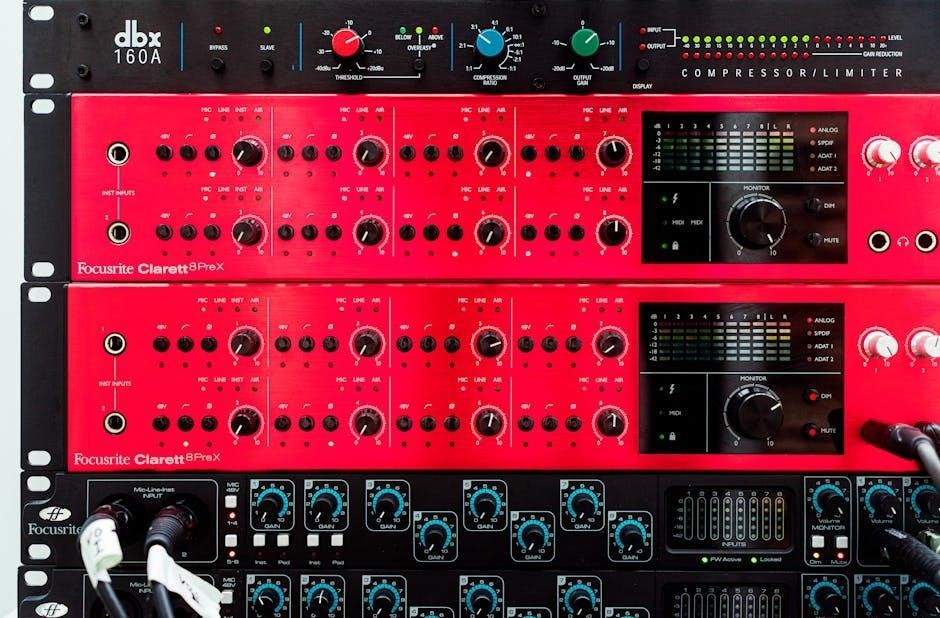
The dbx Quantum II’s core functionality revolves around its multi-band processing capabilities. It expertly handles compression, limiting, expansion, and gating across multiple frequency bands, offering unparalleled control over dynamic range. The integrated parametric EQ allows for precise tonal shaping, while the de-esser effectively reduces sibilance in vocal recordings.
Central to its operation is the dbx Type IV conversion system, known for its transparency and low noise floor. Mastering these functions requires a thorough understanding of the unit’s parameters, best obtained through the official dbx Quantum II PDF manual. This manual details each function, explaining how to optimize settings for various audio sources.
Users encountering issues, such as AES/EBU output noise after a period of disuse, will find troubleshooting guidance within the manual. It also covers essential maintenance procedures like battery replacement and system reboots. Furthermore, the manual indirectly aids in resolving software-related problems, like accessing data within .dbx files used by Outlook Express, by ensuring the hardware operates optimally.
Locating the Official dbx Quantum II PDF Manual
Finding the official dbx Quantum II PDF manual is crucial for optimal operation and troubleshooting. While a direct link isn’t consistently available, several avenues exist for access. Online searches using specific keywords – “dbx Quantum II manual download PDF” – frequently yield results from archive websites and audio engineering forums.
Many users report success by right-clicking on download links and selecting “Save Target As” to ensure the complete manual is downloaded. Be cautious of unofficial sources and prioritize links leading to reputable websites. Some forums require registration or a simple action, like ticking a box, to unlock the download link.

Alternatively, exploring the dbx website (though direct access may vary) and contacting authorized retailers can provide guidance. Remember that the manual is a vital resource for understanding the unit’s complex functions, resolving issues like AES/EBU noise, and performing maintenance tasks. Having a readily available digital copy ensures quick access to essential information.

Troubleshooting Common Issues: AES/EBU Output Noise
A common issue reported with the dbx Quantum II is noise appearing in the AES/EBU output, particularly after a period of inactivity. One user experienced this after the unit was powered off for over a year. A crucial first step is a complete system reboot and battery replacement, as these often resolve the problem.
Unfortunately, a readily available schematic or dedicated repair guide for the Quantum II is scarce. Therefore, relying on the operations manual for troubleshooting is essential. Carefully review the manual’s sections on digital output configuration and grounding. Inspect the AES/EBU cable and connections for any damage or loose fittings.
If the noise persists, consider potential grounding issues within the system. The manual emphasizes the importance of proper grounding through the attachment plug’s green/yellow wire connected directly to the chassis. Further investigation may require professional servicing by qualified personnel familiar with dbx equipment.
Battery Replacement and System Reboot Procedures
Addressing issues with the dbx Quantum II often begins with a battery replacement and subsequent system reboot. As reported by users experiencing AES/EBU output noise, a depleted or failing battery can contribute to operational problems. The specific battery type isn’t detailed in the provided snippets, so consult the official dbx Quantum II PDF manual for exact specifications.
A complete reboot is crucial after battery replacement. While the exact reboot procedure isn’t explicitly outlined, it likely involves powering down the unit, disconnecting the power cable for a short period, and then reconnecting and powering it back on. This allows the system to clear any residual memory and reinitialize its settings.
Refer to the operations manual for detailed instructions on accessing the battery compartment and performing a proper reboot. Always exercise caution when working with electronic equipment and ensure the unit is disconnected from power before attempting any internal procedures. A successful reboot often resolves minor glitches and restores functionality.
Recovering Data from .dbx Files (Outlook Express)
Although seemingly unrelated to the dbx Quantum II itself, the provided information details issues with .dbx files associated with Outlook Express. These files store email messages. If a .dbx file becomes corrupted or inaccessible, recovering data can be challenging. A common solution involves deleting the “Boîte de réception.dbx” file (Inbox.dbx) and then reopening Outlook Express.
This action effectively empties the inbox, allowing users to potentially restore previously moved messages. However, this is a somewhat drastic measure and should be approached with caution. For Outlook 2002 on Vista, integrating .dbx files requires copying them directly into the Outlook Express directory, accessible through the file properties of the inbox.
When copying text from .dbx files, a long press in a text editor’s input field, followed by selecting “Paste,” is suggested as a workaround for potential pasting issues. These methods aim to regain access to lost emails, but the official dbx documentation doesn’t directly address Outlook Express file recovery.
Integrating .dbx Files into Outlook 2002
The process of integrating .dbx files back into Outlook 2002, particularly for users on Windows Vista Premium, requires a direct file manipulation approach. This is often necessary after data loss or corruption within Outlook Express, despite the lack of direct connection to the dbx Quantum II unit;
The recommended method involves copying the problematic .dbx files directly into the Outlook Express directory. To locate this directory, users should right-click on the “Boîte de réception” (Inbox) within Outlook Express and select “Properties.” This reveals the file path where the .dbx files need to be placed.
Successfully copying the files to this location should allow Outlook 2002 to recognize and re-integrate the stored email messages. However, it’s crucial to understand that this isn’t a guaranteed solution, and file corruption may still prevent complete recovery. It’s also important to note that this process is specific to Outlook 2002 and may not apply to newer versions.
Compatibility with Windows XP and Outlook Express 6
Users attempting to open .dbx files with Windows XP and Outlook Express 6 often encounter challenges, particularly after a period of inactivity or system changes. The core issue revolves around Outlook Express’s ability to correctly interpret and access these files, which are often associated with stored email messages.
A common workaround involves attempting to open the files using a text editor like Notes or a similar application capable of handling text input. By performing a long press within the text entry area and selecting “Paste,” users may be able to extract the textual content from the .dbx file.
However, this method doesn’t restore the files within Outlook Express as structured emails. It merely recovers the raw text. While this can be useful for salvaging important information, it doesn’t address the underlying compatibility issue between Windows XP, Outlook Express 6, and the .dbx file format. Further troubleshooting may be required.
Copying and Pasting Text from .dbx Files

When direct access to .dbx files within Outlook Express is compromised, recovering textual content relies on alternative methods. A frequently suggested technique involves utilizing a text editor, such as Notes or any application designed for text input, to extract information.
The process entails opening the .dbx file within the text editor. Crucially, a long press within the editor’s input field is required to activate the “Paste” option. Selecting “Paste” then attempts to transfer the content from the .dbx file into the text editor’s interface.
This method doesn’t reconstruct the original email formatting or attachments; it focuses solely on retrieving the visible text. While effective for salvaging message bodies, it’s important to understand its limitations. The copied text may require significant reformatting to regain readability. This workaround is particularly useful when dealing with corrupted or inaccessible .dbx files.
Purchasing Spare Parts and Accessories
To ensure the longevity and optimal performance of your dbx Quantum II, sourcing genuine spare parts and accessories is crucial. Direct procurement from the manufacturer is the recommended approach, facilitating access to authentic components designed specifically for this professional audio processing unit.
The dbx website serves as the primary channel for initiating parts requests and inquiries. Alternatively, authorized retailers specializing in pro audio equipment can also fulfill orders for Quantum II components. These retailers maintain established relationships with dbx and offer verified products.

When contacting dbx or an authorized dealer, having the Quantum II’s serial number readily available streamlines the process. This allows for accurate identification of compatible parts. Be prepared to specify the exact component needed, referencing the unit’s documentation if possible. Prioritize genuine dbx parts to maintain the integrity and warranty of your equipment.
Safety Precautions: Attachment Plug and Grounding
Maintaining electrical safety is paramount when servicing the dbx Quantum II. If the attachment plug requires replacement, it must be performed by qualified service personnel. Improper handling can create a significant electrical hazard.
Refer to the unit’s internal documentation – though a schematic isn’t readily available – for specific wiring diagrams related to the attachment plug. Crucially, the green/yellow wire, designated for grounding, must be directly connected to the unit’s chassis. This ensures a reliable earth connection, mitigating the risk of electric shock.
Never attempt to bypass or disable the grounding connection. Doing so compromises the safety features built into the Quantum II. Qualified technicians understand the importance of proper grounding and adhere to established safety protocols. Always disconnect the unit from the mains power before undertaking any servicing or component replacement. Prioritize safety to prevent injury and equipment damage.
The dbx Type IV Conversion System Explained
The dbx Quantum II’s core strength lies in its sophisticated dbx Type IV conversion system. This technology represents a significant advancement in audio processing, delivering exceptional dynamic range and low noise performance. It’s a key component enabling the unit’s multi-band compression, limiting, expansion, and gating capabilities.
Type IV isn’t simply a compressor or expander; it’s a complete dynamic processing system. It analyzes incoming audio signals and applies precise gain adjustments across multiple frequency bands. This allows for transparent and musical control over dynamics, preserving the natural character of the source material. The system’s effectiveness stems from its ability to react quickly and accurately to transient signals.

Understanding Type IV is crucial for maximizing the Quantum II’s potential. The PDF manual details the system’s parameters and how to tailor them to specific audio applications. It’s a powerful tool for achieving professional-quality sound, offering unparalleled control over dynamic range and sonic clarity.
Digital Multi-band Compression/Limiting/Expansion/Gating
The dbx Quantum II excels in dynamic control through its advanced digital multi-band processing. Unlike single-band compression, this unit divides the audio spectrum into multiple frequency bands, allowing independent processing of each. This results in more transparent and precise control, avoiding unwanted artifacts often associated with traditional compression.

Limiting prevents signals from exceeding a defined threshold, protecting downstream equipment and ensuring consistent output levels. Expansion reduces dynamic range, enhancing subtle details, while gating silences signals below a set threshold, reducing noise. The Quantum II seamlessly integrates these functions.
The PDF manual provides detailed explanations of each band’s parameters – threshold, ratio, attack, and release – enabling users to sculpt audio with surgical precision. Mastering these controls unlocks the Quantum II’s full potential for mixing, mastering, and live sound reinforcement. Experimentation, guided by the manual, is key to achieving optimal results.

Parametric EQ and De-Essing Capabilities
The dbx Quantum II incorporates a sophisticated parametric equalizer, offering precise tonal shaping capabilities. Unlike graphic EQs with fixed frequencies, parametric EQs allow control over frequency, gain, and Q (bandwidth) for each band. This flexibility enables targeted adjustments to address specific sonic issues or enhance desired frequencies.
The unit’s de-essing functionality is crucial for controlling sibilance – harsh “s” sounds – in vocals and other recordings. The de-esser intelligently detects and attenuates these frequencies, resulting in a smoother, more natural sound. The PDF manual details the de-esser’s threshold, ratio, and frequency settings.
Combined, the parametric EQ and de-esser provide powerful tools for refining audio. Mastering these features, as outlined in the manual, allows for professional-quality sound sculpting. Careful adjustment of EQ bands and de-essing parameters is essential for achieving transparent and polished results.
Authorized Retailers and Contact Information
To purchase Quantum II spares or accessories, direct contact with the company is recommended. The official dbx website provides a comprehensive list of authorized retailers located globally, ensuring genuine parts and reliable service. This resource is regularly updated, guaranteeing access to the most current information.
Beyond authorized retailers, the dbx website offers direct contact options, including a dedicated customer support portal and contact form. These channels facilitate inquiries regarding product specifications, troubleshooting assistance, and warranty claims. Prompt and efficient support is a priority for dbx.
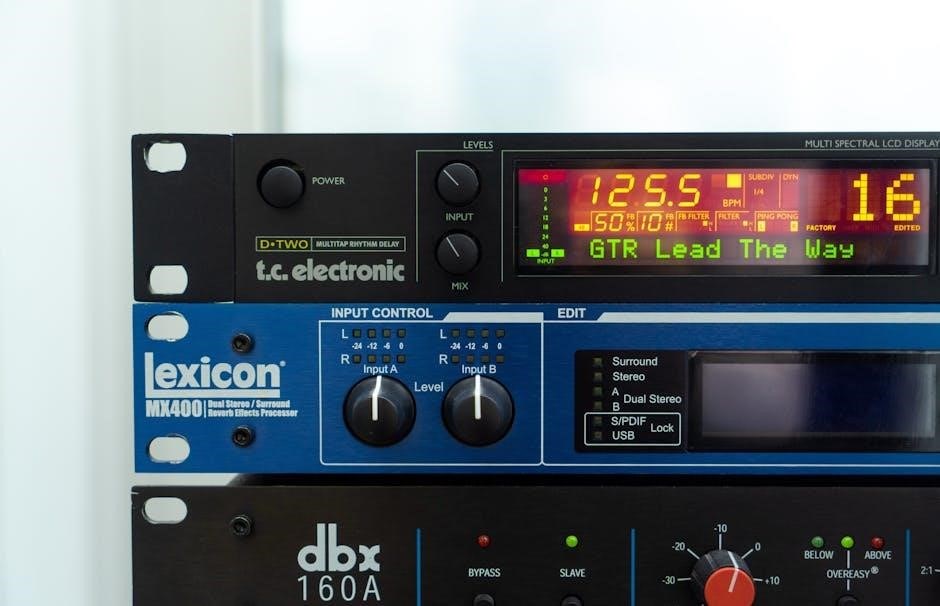
The PDF manual itself often contains contact details for regional service centers. Utilizing these resources ensures that any technical issues or repair needs are addressed by qualified personnel familiar with the Quantum II. Always verify retailer authorization before making purchases to avoid counterfeit components.