
dbx quantum ii pdf manual

dbx Quantum II PDF Manual: A Comprehensive Guide

This guide provides essential information regarding the dbx Quantum II, including troubleshooting, data recovery, and operational details. Access the official PDF manual online for comprehensive support.

The dbx Quantum II represents a significant advancement in professional audio processing, offering a comprehensive suite of tools for dynamics control and equalization. This digital multi-band compressor/limiter/expander/gate, coupled with parametric EQ and de-essing capabilities, utilizes the renowned dbx Type IV conversion system to deliver exceptional audio quality.

Originally released to critical acclaim, the Quantum II quickly became a staple in recording studios and live sound environments. Its versatility allows engineers to shape and refine audio signals with precision, addressing a wide range of sonic challenges. Understanding its functions requires access to detailed documentation, making the official dbx Quantum II PDF manual an invaluable resource.

This manual details everything from basic operation to advanced configuration, assisting users in maximizing the unit’s potential. Common issues, like AES/EBU output noise after prolonged inactivity (reported as recently as March 24, 2026), are addressed, alongside procedures for battery replacement and system reboots. The manual also provides guidance on data recovery from .dbx files, particularly relevant for users of Outlook Express.

Understanding the Quantum II’s Core Functions
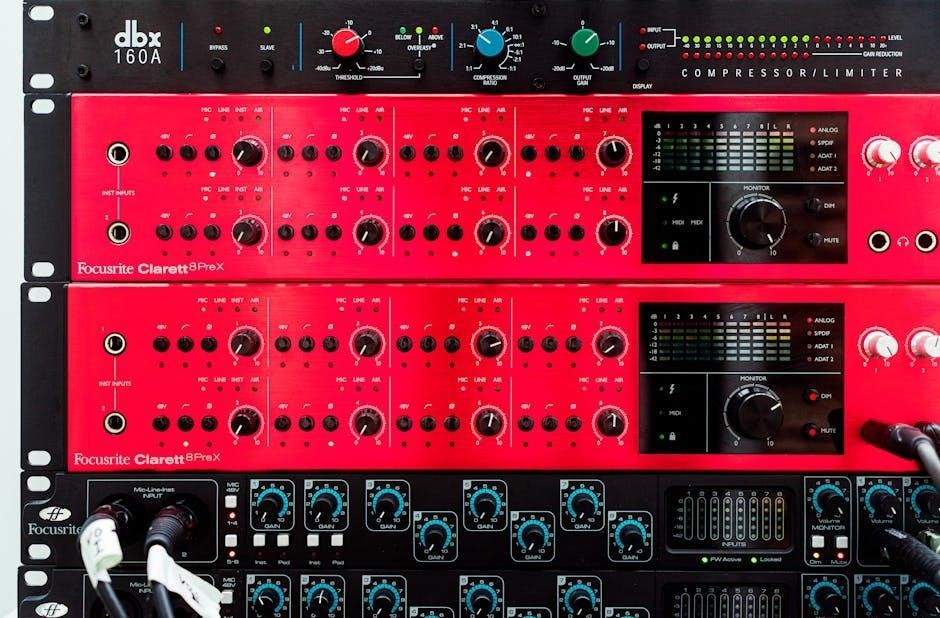
The dbx Quantum II’s core functionality revolves around its multi-band processing capabilities. It expertly handles compression, limiting, expansion, and gating across multiple frequency bands, offering unparalleled control over dynamic range. The integrated parametric EQ allows for precise tonal shaping, while the de-esser effectively reduces sibilance in vocal recordings.

Central to its operation is the dbx Type IV conversion system, known for its transparency and low noise floor. Mastering these functions requires a thorough understanding of the unit’s parameters, best obtained through the official dbx Quantum II PDF manual. This manual details each function, explaining how to optimize settings for various audio sources.

Users encountering issues, such as AES/EBU output noise after a period of disuse, will find troubleshooting guidance within the manual. It also covers essential maintenance procedures like battery replacement and system reboots. Furthermore, the manual indirectly aids in resolving software-related problems, like accessing data within .dbx files used by Outlook Express, by ensuring the hardware operates optimally.

Locating the Official dbx Quantum II PDF Manual

Finding the official dbx Quantum II PDF manual is crucial for optimal operation and troubleshooting. While a direct link isn’t consistently available, several avenues exist for access. Online searches using specific keywords – “dbx Quantum II manual download PDF” – frequently yield results from archive websites and audio engineering forums.

Many users report success by right-clicking on download links and selecting “Save Target As” to ensure the complete manual is downloaded. Be cautious of unofficial sources and prioritize links leading to reputable websites. Some forums require registration or a simple action, like ticking a box, to unlock the download link.

Alternatively, exploring the dbx website (though direct access may vary) and contacting authorized retailers can provide guidance. Remember that the manual is a vital resource for understanding the unit’s complex functions, resolving issues like AES/EBU noise, and performing maintenance tasks. Having a readily available digital copy ensures quick access to essential information.

Troubleshooting Common Issues: AES/EBU Output Noise

A common issue reported with the dbx Quantum II is noise appearing in the AES/EBU output, particularly after a period of inactivity. One user experienced this after the unit was powered off for over a year. A crucial first step is a complete system reboot and battery replacement, as these often resolve the problem.

Unfortunately, a readily available schematic or dedicated repair guide for the Quantum II is scarce. Therefore, relying on the operations manual for troubleshooting is essential. Carefully review the manual’s sections on digital output configuration and grounding. Inspect the AES/EBU cable and connections for any damage or loose fittings.

If the noise persists, consider potential grounding issues within the system. The manual emphasizes the importance of proper grounding through the attachment plug’s green/yellow wire connected directly to the chassis. Further investigation may require professional servicing by qualified personnel familiar with dbx equipment.

Battery Replacement and System Reboot Procedures

Addressing issues with the dbx Quantum II often begins with a battery replacement and subsequent system reboot. As reported by users experiencing AES/EBU output noise, a depleted or failing battery can contribute to operational problems. The specific battery type isn’t detailed in the provided snippets, so consult the official dbx Quantum II PDF manual for exact specifications.

A complete reboot is crucial after battery replacement. While the exact reboot procedure isn’t explicitly outlined, it likely involves powering down the unit, disconnecting the power cable for a short period, and then reconnecting and powering it back on. This allows the system to clear any residual memory and reinitialize its settings.

Refer to the operations manual for detailed instructions on accessing the battery compartment and performing a proper reboot. Always exercise caution when working with electronic equipment and ensure the unit is disconnected from power before attempting any internal procedures. A successful reboot often resolves minor glitches and restores functionality.

Recovering Data from .dbx Files (Outlook Express)

Although seemingly unrelated to the dbx Quantum II itself, the provided information details issues with .dbx files associated with Outlook Express. These files store email messages. If a .dbx file becomes corrupted or inaccessible, recovering data can be challenging. A common solution involves deleting the “Boîte de réception.dbx” file (Inbox.dbx) and then reopening Outlook Express.

This action effectively empties the inbox, allowing users to potentially restore previously moved messages. However, this is a somewhat drastic measure and should be approached with caution. For Outlook 2002 on Vista, integrating .dbx files requires copying them directly into the Outlook Express directory, accessible through the file properties of the inbox.

When copying text from .dbx files, a long press in a text editor’s input field, followed by selecting “Paste,” is suggested as a workaround for potential pasting issues. These methods aim to regain access to lost emails, but the official dbx documentation doesn’t directly address Outlook Express file recovery.

Integrating .dbx Files into Outlook 2002

The process of integrating .dbx files back into Outlook 2002, particularly for users on Windows Vista Premium, requires a direct file manipulation approach. This is often necessary after data loss or corruption within Outlook Express, despite the lack of direct connection to the dbx Quantum II unit;

The recommended method involves copying the problematic .dbx files directly into the Outlook Express directory. To locate this directory, users should right-click on the “Boîte de réception” (Inbox) within Outlook Express and select “Properties.” This reveals the file path where the .dbx files need to be placed.

Successfully copying the files to this location should allow Outlook 2002 to recognize and re-integrate the stored email messages. However, it’s crucial to understand that this isn’t a guaranteed solution, and file corruption may still prevent complete recovery. It’s also important to note that this process is specific to Outlook 2002 and may not apply to newer versions.

Compatibility with Windows XP and Outlook Express 6

Users attempting to open .dbx files with Windows XP and Outlook Express 6 often encounter challenges, particularly after a period of inactivity or system changes. The core issue revolves around Outlook Express’s ability to correctly interpret and access these files, which are often associated with stored email messages.

A common workaround involves attempting to open the files using a text editor like Notes or a similar application capable of handling text input. By performing a long press within the text entry area and selecting “Paste,” users may be able to extract the textual content from the .dbx file.

However, this method doesn’t restore the files within Outlook Express as structured emails. It merely recovers the raw text. While this can be useful for salvaging important information, it doesn’t address the underlying compatibility issue between Windows XP, Outlook Express 6, and the .dbx file format. Further troubleshooting may be required.

Copying and Pasting Text from .dbx Files

When direct access to .dbx files within Outlook Express is compromised, recovering textual content relies on alternative methods. A frequently suggested technique involves utilizing a text editor, such as Notes or any application designed for text input, to extract information.

The process entails opening the .dbx file within the text editor. Crucially, a long press within the editor’s input field is required to activate the “Paste” option. Selecting “Paste” then attempts to transfer the content from the .dbx file into the text editor’s interface.

This method doesn’t reconstruct the original email formatting or attachments; it focuses solely on retrieving the visible text. While effective for salvaging message bodies, it’s important to understand its limitations. The copied text may require significant reformatting to regain readability. This workaround is particularly useful when dealing with corrupted or inaccessible .dbx files.

Purchasing Spare Parts and Accessories

To ensure the longevity and optimal performance of your dbx Quantum II, sourcing genuine spare parts and accessories is crucial. Direct procurement from the manufacturer is the recommended approach, facilitating access to authentic components designed specifically for this professional audio processing unit.

The dbx website serves as the primary channel for initiating parts requests and inquiries. Alternatively, authorized retailers specializing in pro audio equipment can also fulfill orders for Quantum II components. These retailers maintain established relationships with dbx and offer verified products.

When contacting dbx or an authorized dealer, having the Quantum II’s serial number readily available streamlines the process. This allows for accurate identification of compatible parts. Be prepared to specify the exact component needed, referencing the unit’s documentation if possible. Prioritize genuine dbx parts to maintain the integrity and warranty of your equipment.

Safety Precautions: Attachment Plug and Grounding

Maintaining electrical safety is paramount when servicing the dbx Quantum II. If the attachment plug requires replacement, it must be performed by qualified service personnel. Improper handling can create a significant electrical hazard.

Refer to the unit’s internal documentation – though a schematic isn’t readily available – for specific wiring diagrams related to the attachment plug. Crucially, the green/yellow wire, designated for grounding, must be directly connected to the unit’s chassis. This ensures a reliable earth connection, mitigating the risk of electric shock.

Never attempt to bypass or disable the grounding connection. Doing so compromises the safety features built into the Quantum II. Qualified technicians understand the importance of proper grounding and adhere to established safety protocols. Always disconnect the unit from the mains power before undertaking any servicing or component replacement. Prioritize safety to prevent injury and equipment damage.

The dbx Type IV Conversion System Explained

The dbx Quantum II’s core strength lies in its sophisticated dbx Type IV conversion system. This technology represents a significant advancement in audio processing, delivering exceptional dynamic range and low noise performance. It’s a key component enabling the unit’s multi-band compression, limiting, expansion, and gating capabilities.

Type IV isn’t simply a compressor or expander; it’s a complete dynamic processing system. It analyzes incoming audio signals and applies precise gain adjustments across multiple frequency bands. This allows for transparent and musical control over dynamics, preserving the natural character of the source material. The system’s effectiveness stems from its ability to react quickly and accurately to transient signals.

Understanding Type IV is crucial for maximizing the Quantum II’s potential. The PDF manual details the system’s parameters and how to tailor them to specific audio applications. It’s a powerful tool for achieving professional-quality sound, offering unparalleled control over dynamic range and sonic clarity.

Digital Multi-band Compression/Limiting/Expansion/Gating

The dbx Quantum II excels in dynamic control through its advanced digital multi-band processing. Unlike single-band compression, this unit divides the audio spectrum into multiple frequency bands, allowing independent processing of each. This results in more transparent and precise control, avoiding unwanted artifacts often associated with traditional compression.

Limiting prevents signals from exceeding a defined threshold, protecting downstream equipment and ensuring consistent output levels. Expansion reduces dynamic range, enhancing subtle details, while gating silences signals below a set threshold, reducing noise. The Quantum II seamlessly integrates these functions.

The PDF manual provides detailed explanations of each band’s parameters – threshold, ratio, attack, and release – enabling users to sculpt audio with surgical precision. Mastering these controls unlocks the Quantum II’s full potential for mixing, mastering, and live sound reinforcement. Experimentation, guided by the manual, is key to achieving optimal results.

Parametric EQ and De-Essing Capabilities

The dbx Quantum II incorporates a sophisticated parametric equalizer, offering precise tonal shaping capabilities. Unlike graphic EQs with fixed frequencies, parametric EQs allow control over frequency, gain, and Q (bandwidth) for each band. This flexibility enables targeted adjustments to address specific sonic issues or enhance desired frequencies.

The unit’s de-essing functionality is crucial for controlling sibilance – harsh “s” sounds – in vocals and other recordings. The de-esser intelligently detects and attenuates these frequencies, resulting in a smoother, more natural sound. The PDF manual details the de-esser’s threshold, ratio, and frequency settings.

Combined, the parametric EQ and de-esser provide powerful tools for refining audio. Mastering these features, as outlined in the manual, allows for professional-quality sound sculpting. Careful adjustment of EQ bands and de-essing parameters is essential for achieving transparent and polished results.

Authorized Retailers and Contact Information

To purchase Quantum II spares or accessories, direct contact with the company is recommended. The official dbx website provides a comprehensive list of authorized retailers located globally, ensuring genuine parts and reliable service. This resource is regularly updated, guaranteeing access to the most current information.

Beyond authorized retailers, the dbx website offers direct contact options, including a dedicated customer support portal and contact form. These channels facilitate inquiries regarding product specifications, troubleshooting assistance, and warranty claims. Prompt and efficient support is a priority for dbx.
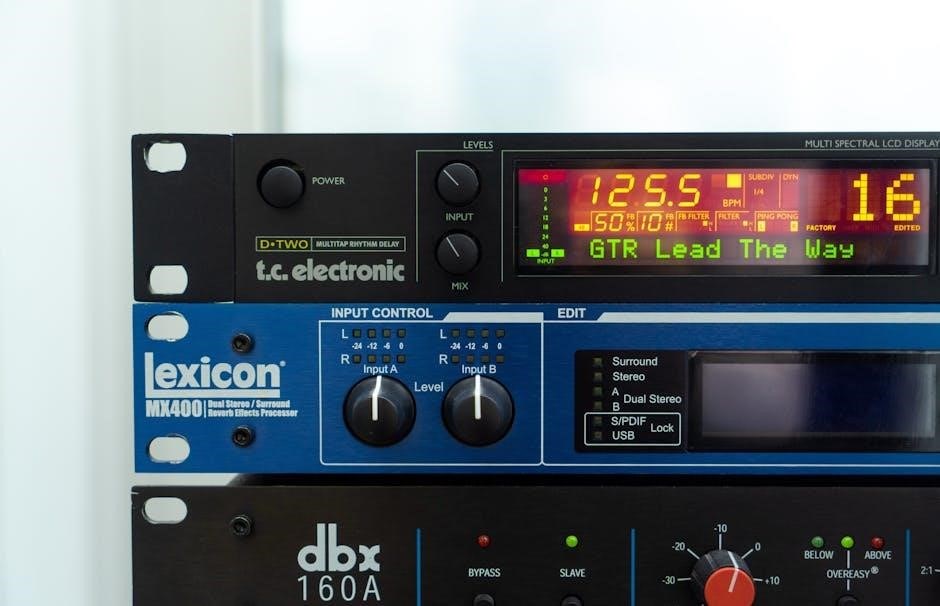
The PDF manual itself often contains contact details for regional service centers. Utilizing these resources ensures that any technical issues or repair needs are addressed by qualified personnel familiar with the Quantum II. Always verify retailer authorization before making purchases to avoid counterfeit components.


bar guide

Bar Guide: A Comprehensive Overview

Navigating the world of bars requires understanding diverse options‚ terminology‚ etiquette‚ and safety measures – a complete guide for enjoyable experiences․

What is a Bar?

A bar is a licensed establishment serving alcoholic beverages for consumption on-site‚ often alongside non-alcoholic drinks and food․ Historically‚ bars evolved from taverns and inns‚ providing refreshment and social gathering spaces․

Today‚ bars represent a diverse spectrum of venues‚ ranging from casual neighborhood pubs to upscale cocktail lounges․ They function as social hubs‚ places for relaxation‚ and entertainment destinations․ The core function remains the provision of beverages‚ but the atmosphere‚ clientele‚ and offerings vary significantly․

Bars are regulated by local and national laws concerning alcohol sales‚ operating hours‚ and responsible service practices‚ ensuring public safety and well-being․

Types of Bars

The bar landscape is incredibly diverse‚ catering to varied tastes and preferences․ Pubs and traditional bars offer a cozy‚ relaxed atmosphere‚ often with a focus on beer and classic pub fare․ Sports bars center around televised sporting events‚ creating an energetic and communal viewing experience․

Cocktail bars specialize in expertly crafted mixed drinks‚ emphasizing presentation and unique flavor combinations․ Wine bars provide a sophisticated setting for enjoying a curated selection of wines․ Dive bars are unpretentious‚ neighborhood establishments known for their affordability and local character․

Hotel bars offer convenience and often a more upscale ambiance for guests and visitors alike․

Pubs & Traditional Bars

Pubs and traditional bars represent the heart of many communities‚ steeped in history and offering a welcoming atmosphere․ Characterized by their cozy interiors‚ often featuring dark wood‚ comfortable seating‚ and a sense of timelessness‚ these establishments prioritize conversation and camaraderie․

The beverage selection typically focuses on a wide range of beers – both local and international – alongside classic spirits and simple cocktails․ Expect hearty‚ comforting food options like pub grub‚ pies‚ and sandwiches․ Live traditional music sessions are common‚ adding to the authentic experience․

These bars are ideal for a relaxed evening with friends‚ a quiet pint‚ and a taste of local culture․

Sports Bars

Sports bars are designed for enthusiastic viewing of athletic events‚ creating a high-energy and communal atmosphere․ Dominated by numerous large-screen televisions broadcasting a variety of games‚ these venues cater to dedicated fans seeking a lively experience․

Expect a casual setting‚ often with ample seating‚ and a menu focused on classic American fare – wings‚ burgers‚ nachos‚ and pizza are staples․ A wide selection of beers‚ particularly domestic and craft brews‚ is typically available․ Sound levels can be high‚ contributing to the excitement․

Sports bars are perfect for gathering with friends to cheer on your favorite team and enjoy a competitive spirit․

Cocktail Bars

Cocktail bars prioritize expertly crafted drinks‚ offering a sophisticated and refined experience for discerning palates․ These establishments distinguish themselves through skilled mixologists‚ premium spirits‚ and innovative recipes‚ moving beyond simple pours․

The ambiance is typically more upscale and intimate‚ with stylish décor and attentive service․ Expect a curated menu featuring both classic cocktails – Manhattans‚ Old Fashioneds‚ Margaritas – and original creations․ Presentation is key‚ often involving elaborate garnishes and glassware․

Cocktail bars are ideal for a relaxed evening‚ enjoying conversation‚ and savoring complex and flavorful beverages․ They represent a modern evolution of the traditional bar scene․

Wine Bars

Wine bars offer a relaxed and sophisticated atmosphere centered around the appreciation of wine‚ providing a diverse selection by the glass or bottle․ These establishments cater to both wine connoisseurs and those looking to explore different varietals․

Beyond wine‚ many wine bars also serve complementary small plates – cheeses‚ charcuterie‚ olives‚ and tapas – designed to enhance the tasting experience․ The ambiance is generally more subdued and conversational than a typical bar‚ fostering a social yet refined setting․

Expect knowledgeable staff who can guide you through the wine list and offer pairing suggestions․ Wine bars are perfect for a date night‚ catching up with friends‚ or a quiet evening of indulgence․

Dive Bars

Dive bars are unpretentious‚ often neighborhood establishments known for their casual atmosphere‚ low prices‚ and loyal local clientele․ Characterized by a lack of frills – think worn furniture‚ dim lighting‚ and simple décor – they offer an authentic and unpolished experience․

Don’t expect fancy cocktails or extensive wine lists; dive bars typically focus on basic drinks like beer‚ shots‚ and well liquors․ They’re places where you can relax‚ be yourself‚ and enjoy genuine interactions with regulars and bartenders․

Dive bars often host events like karaoke‚ trivia nights‚ or live music‚ adding to their unique charm․ They represent a slice of local culture and offer a refreshing alternative to more upscale venues․

Hotel Bars

Hotel bars offer a unique blend of convenience‚ sophistication‚ and often‚ a touch of luxury․ Catering to both hotel guests and locals‚ these establishments typically boast a refined ambiance‚ comfortable seating‚ and a comprehensive drink menu․

Expect a wider selection of cocktails‚ wines‚ and spirits compared to more casual bars‚ alongside attentive service from professional bartenders․ Hotel bars frequently feature live piano music or a relaxed lounge atmosphere‚ making them ideal for a quiet evening or a pre-dinner drink․

They can be pricier than other options‚ but the quality and convenience often justify the cost․ Many hotel bars also offer light bites or full dining menus․

Essential Bar Terminology

Understanding bar lingo enhances your experience and ensures clear communication with bartenders․ “Well drinks” utilize the most affordable bottles‚ while “call drinks” specify a preferred brand․ Knowing how you want your drink served is crucial: “neat” means straight from the bottle‚ “straight up” is chilled with no ice‚ and “on the rocks” includes ice․

Behind the bar‚ the “back” refers to the area with spirits and glassware․ The “speed rack” holds frequently used liquors for quick access‚ and the “rail” displays premium options․ Familiarize yourself with these terms to navigate orders confidently․

Bartenders also use terms like “double” or “single” to indicate the amount of liquor․

Well Drinks vs․ Call Drinks

The distinction between “well drinks” and “call drinks” significantly impacts both price and quality․ “Well drinks‚” also known as house brands‚ are made with the bar’s standard‚ typically more affordable‚ liquors․ Ordering a “vodka tonic” without specifying a brand will likely result in a well vodka being used․

Conversely‚ “call drinks” involve requesting a specific brand – for example‚ a “Grey Goose vodka tonic․” This “calls” for a particular bottle‚ usually resulting in a higher price due to the premium nature of the requested spirit․ Understanding this difference allows for informed ordering and budget management․

Always clarify if unsure about the brand being used!

Neat‚ Straight Up‚ and On the Rocks

Understanding these three common requests is crucial for enjoying spirits as intended․ “Neat” means the spirit is served at room temperature‚ in a glass‚ with absolutely nothing added – no ice‚ no water‚ no mixers․ It’s the purest expression of the liquor․

“Straight up” signifies the spirit is chilled‚ typically by stirring or shaking with ice‚ then strained into a stemmed glass – no ice remains in the final drink; This offers a chilled‚ smooth experience․

Finally‚ “on the rocks” simply means the spirit is served over ice in a rocks glass․ This dilutes the drink slightly as the ice melts‚ altering the flavor profile․

Back‚ Speed Rack‚ and Rail

These terms define the bartender’s workspace and organization of liquor․ The “back” refers to the entire area behind the bar‚ encompassing storage‚ glassware‚ and often the sink․ It’s the bartender’s primary operational zone․

The “speed rack” is a tiered‚ angled shelf directly in front of the bartender‚ holding the most frequently used liquors․ This allows for quick and efficient access during busy service․ It’s all about speed and minimizing movement․

The “rail” is the front edge of the bar top‚ typically featuring well liquors – the most affordable options․ These are used in standard mixed drinks and are easily accessible for quick pours․

Popular Bar Drinks

The world of bar beverages is incredibly diverse‚ catering to every palate․ Beers range from light lagers – crisp and refreshing – to rich stouts‚ offering roasted flavors․ Ales provide a spectrum of fruitiness and hop bitterness․

Classic cocktails like Old Fashioneds‚ Martinis‚ and Manhattans remain timeless favorites‚ while modern mixes experiment with unique ingredients and techniques․ These showcase bartender creativity․

Spirits form the base of many drinks: vodka’s neutrality‚ gin’s botanical complexity‚ rum’s sweetness‚ whiskey’s depth‚ and tequila’s agave character․ Non-alcoholic options‚ including mocktails and sodas‚ ensure inclusivity for all patrons․

Beers: Lagers‚ Ales‚ and Stouts

Beer’s vast landscape is broadly categorized into lagers‚ ales‚ and stouts‚ each with distinct characteristics․ Lagers‚ typically bottom-fermented‚ are known for their crisp‚ clean flavors and often lighter body – think Pilsners and pale lagers․ They’re generally refreshing and easy-drinking․

Ales‚ top-fermented‚ exhibit a wider range of flavors‚ from fruity esters in Belgian ales to the hoppy bitterness of IPAs․ They offer more complexity and aroma․

Stouts‚ a dark ale variety‚ are brewed with roasted malts‚ resulting in coffee and chocolate notes․ From dry Irish stouts to sweet milk stouts‚ they provide a rich‚ satisfying experience․

Cocktails: Classics and Modern Mixes

The cocktail world blends tradition with innovation‚ offering a spectrum from timeless classics to cutting-edge creations․ Classic cocktails‚ like Old Fashioneds‚ Martinis‚ and Manhattans‚ showcase balanced flavors and refined techniques‚ representing the golden age of mixology․

Modern mixes push boundaries with unique ingredients‚ infusions‚ and presentation․ Bartenders experiment with flavors‚ textures‚ and molecular gastronomy to deliver novel experiences․

Understanding base spirits‚ modifiers (liqueurs‚ bitters)‚ and garnishes is key to appreciating cocktail artistry․ Whether you prefer a simple highball or a complex layered drink‚ the possibilities are endless․

Spirits: Vodka‚ Gin‚ Rum‚ Whiskey‚ Tequila

Spirits form the foundation of countless cocktails and offer diverse flavor profiles for sipping neat․ Vodka‚ known for its neutrality‚ serves as a versatile base․ Gin‚ infused with botanicals‚ provides complex herbal notes․

Rum‚ derived from sugarcane‚ ranges from light and fruity to dark and molasses-rich․ Whiskey‚ aged in oak barrels‚ delivers smoky‚ caramel‚ and spice nuances – encompassing Scotch‚ Bourbon‚ and Rye․

Tequila‚ crafted from blue agave‚ offers earthy and citrusy characteristics․ Exploring different brands and production methods within each spirit category unlocks a world of taste․

Non-Alcoholic Options

Modern bars increasingly cater to those abstaining from alcohol‚ offering sophisticated alternatives beyond simple sodas․ Expect a growing selection of mocktails‚ skillfully crafted to mimic classic cocktails without the spirits – think virgin Mojitos or alcohol-free Margaritas․

Premium non-alcoholic beers and wines are also becoming readily available‚ providing familiar tastes for designated drivers or mindful drinkers․ Freshly squeezed juices‚ artisanal sodas‚ and flavored sparkling waters add further variety․

Don’t hesitate to ask the bartender to create a custom mocktail based on your preferences; they’re often happy to accommodate!

Bar Etiquette & Tips

Navigating bar culture involves understanding unspoken rules for a pleasant experience for everyone․ Always make eye contact and acknowledge the bartender before signaling for a drink – avoid waving money or shouting․

Tipping is customary‚ generally $1-2 per drink or 15-20% of the tab‚ rewarding good service․ Order politely‚ using “please” and “thank you․” Be mindful of your consumption; pace yourself and alternate alcoholic drinks with water․

Respect personal space‚ both at the bar and on the dance floor․ Avoid overly loud conversations and be considerate of those around you․ Most importantly‚ drink responsibly and never drink and drive․

Tipping Your Bartender

Tipping bartenders is a significant part of bar culture‚ directly impacting their income and reflecting service quality․ A standard tip generally ranges from $1 to $2 per drink‚ or 15% to 20% of the total bar tab‚ depending on the complexity of the order and the level of service provided․

For simple beer or well drink orders‚ $1 is acceptable‚ while complex cocktails warrant a higher tip․ Consider tipping more for exceptional service‚ like prompt attention or helpful recommendations․ Cash tips are preferred‚ but many bars allow adding a tip to a credit card payment․

Remember‚ bartenders often share tips with support staff‚ so your generosity benefits the entire team․

Ordering Drinks Politely

Polite and clear communication is key to a smooth bar experience for both you and the bartender․ Avoid waving frantically or shouting to get attention; making eye contact and a slight raise of the hand is more effective and respectful․

When ordering‚ state your drink clearly and concisely․ Knowing the name of your desired beverage demonstrates consideration․ If you’re unsure‚ ask for recommendations or clarification on the menu․ Avoid snapping your fingers or using demanding language․

Say “please” and “thank you” – simple courtesies go a long way․ Be patient during busy periods‚ and understand bartenders are managing multiple requests simultaneously․

Pace Yourself & Drink Responsibly

Enjoying a night out responsibly is paramount for your safety and well-being․ Alternate alcoholic beverages with water or soft drinks to stay hydrated and slow down alcohol absorption․ Eating before and during drinking significantly impacts how your body processes alcohol․

Be mindful of your drink’s strength and your personal tolerance․ It’s easy to underestimate the effects‚ especially with mixed drinks․ Never feel pressured to keep up with others; drink at your own pace․

Recognize the signs of intoxication in yourself and others‚ and know when to stop․ Plan for a safe ride home – designate a driver‚ use a ride-sharing service‚ or take public transportation․

Finding the Right Bar

Locating the perfect bar hinges on aligning your preferences with available options; Begin by leveraging online resources and apps like Yelp‚ Google Maps‚ and dedicated bar finder websites to explore nearby establishments․

Consider the location and atmosphere – do you prefer a lively downtown scene or a quieter neighborhood spot? Think about the vibe you’re seeking: energetic sports bar‚ intimate cocktail lounge‚ or relaxed pub․

Thoroughly check reviews and ratings to gauge other patrons’ experiences regarding service‚ drink quality‚ and overall ambiance․ Social media can also offer valuable insights into a bar’s current events and specials․

Using Online Resources & Apps

Digital tools are invaluable for discovering bars tailored to your tastes․ Platforms like Yelp and Google Maps provide comprehensive listings‚ including addresses‚ hours‚ menus‚ and user reviews․ Dedicated bar finder apps‚ often region-specific‚ offer curated selections and filtering options․

Social media platforms like Facebook and Instagram showcase bar events‚ promotions‚ and atmospheres through photos and videos․ Websites specializing in nightlife often feature detailed bar guides and ratings․

Utilize these resources to compare options‚ read feedback‚ and identify bars that align with your desired experience – from lively sports bars to sophisticated cocktail lounges․

Considering Location & Atmosphere

The ideal bar experience hinges on location and ambiance․ Proximity to your current location or planned activities is a practical starting point․ Consider whether you prefer a bustling downtown scene or a quieter neighborhood spot․

Atmosphere is equally crucial․ Do you envision a lively‚ energetic environment with music and crowds‚ or a more relaxed‚ intimate setting for conversation? Think about the décor‚ lighting‚ and overall vibe․

Some bars specialize in specific atmospheres – sports bars for game days‚ cocktail bars for sophisticated evenings‚ or pubs for a traditional feel․ Align your choice with your mood and preferences․

Checking Reviews & Ratings

Before venturing to a new bar‚ leverage the power of online reviews and ratings․ Platforms like Yelp‚ Google Reviews‚ and TripAdvisor offer valuable insights from fellow patrons․

Pay attention to recurring themes in the reviews․ Are people consistently praising the drink quality‚ service‚ or atmosphere? Conversely‚ are there frequent complaints about long wait times‚ high prices‚ or cleanliness?

Consider the number of reviews – a larger sample size generally provides a more reliable picture․ Look for recent reviews to ensure the information is current․ Don’t dismiss a bar based on a single negative review‚ but heed consistent patterns of criticism․

Bar Safety & Awareness

Prioritizing safety is crucial for a positive bar experience․ Be mindful of your surroundings and trust your instincts․ Recognizing over-intoxication – in yourself and others – is paramount; offer assistance if needed‚ and don’t hesitate to seek help from bar staff․

Never leave your drink unattended‚ and always accept beverages directly from the bartender․ Protecting your drink minimizes the risk of unwanted substances being added․ Know your limits and pace yourself; alternate alcoholic drinks with water or soft drinks․

Arrange safe transportation home beforehand – designate a driver‚ utilize ride-sharing services‚ or take public transport․ Avoid walking alone‚ especially at night․

Recognizing Over-Intoxication

Identifying the signs of over-intoxication is vital for personal safety and the well-being of others․ Early indicators include slurred speech‚ impaired coordination‚ and difficulty walking․ Look for changes in behavior‚ such as increased talkativeness‚ mood swings‚ or aggression․

Physical signs may involve flushed skin‚ glassy eyes‚ and slowed reaction times․ Severe intoxication can lead to vomiting‚ confusion‚ and loss of consciousness․ If someone exhibits these symptoms‚ alert bar staff immediately․

Offer water and encourage them to eat something․ Never leave an intoxicated person alone‚ and ensure they get home safely․ Remember‚ responsible drinking is key to avoiding these situations․

Protecting Your Drink

Maintaining awareness of your surroundings and taking proactive steps are crucial for drink safety․ Never leave your drink unattended‚ even for a moment‚ as it can be easily targeted․ Accept drinks only from trusted sources – those you’ve seen being poured or directly from the bartender․

Be wary of accepting drinks from strangers or those you don’t know well․ If someone offers to buy you a drink‚ accompany them to the bar to order it yourself․ Utilize drink covers or coasters to shield your beverage․

If you suspect your drink has been tampered with‚ immediately inform bar staff and do not consume it․ Trust your instincts and prioritize your safety․

Knowing Your Limits

Responsible enjoyment hinges on understanding and respecting your personal alcohol tolerance․ Factors like body weight‚ metabolism‚ food consumption‚ and medication can significantly influence how alcohol affects you․ Start slowly‚ alternating alcoholic beverages with water or non-alcoholic drinks to stay hydrated and pace yourself․

Pay attention to your body’s signals – dizziness‚ blurred vision‚ or impaired judgment are indicators to slow down or stop drinking altogether․ Never feel pressured to keep up with others; prioritize your well-being․

Plan ahead for safe transportation‚ whether it’s a designated driver‚ taxi‚ or rideshare service․ Prioritize safety above all else․

golds gym 290c cycle trainer manual

Golds Gym 290C Cycle Trainer Manual: Article Plan

This comprehensive guide details the Golds Gym 290C, covering assembly, operation, maintenance, troubleshooting, and parts replacement for optimal fitness experiences.

The Golds Gym 290C Cycle Trainer represents a popular choice for home fitness enthusiasts seeking a robust and reliable exercise bike. This model delivers a challenging cardiovascular workout, mirroring the experience of outdoor cycling within the convenience of your home. Designed for various fitness levels, the 290C features adjustable resistance and a user-friendly console. This manual provides detailed instructions for safe assembly, operation, and maintenance, ensuring a long-lasting and effective fitness journey. Understanding its features and following the guidelines will maximize your workout benefits and prevent potential issues.

Overview of the 290C Model

The Golds Gym 290C is an upright exercise bike designed for residential use, offering a stable and comfortable workout experience. It features a chain drive system and adjustable resistance levels, catering to diverse fitness goals. The integrated console tracks essential workout metrics like speed, distance, time, and calories burned. This model, identified as GGEX61612.2, is known for its durability and relatively straightforward assembly. Replacement parts are readily available, extending the bike’s lifespan. It’s a cost-effective option for individuals prioritizing cardiovascular health and home fitness.

Key Features and Specifications

The Golds Gym 290C boasts adjustable resistance, a chain drive system, and a user-friendly LCD console displaying time, speed, distance, and calories. It includes a comfortable, oversized seat and adjustable handlebars for customized positioning. Maximum user weight capacity is 250 lbs. Dimensions are approximately 52”L x 20”W x 40”H. Power source is AC adapter. Key features include pre-programmed workout options and manual mode for personalized training. It’s designed for home use, offering a robust and accessible fitness solution.

Assembly Instructions

Prior to assembly, carefully unpack all components and verify against the parts list. Tools typically required include a wrench and screwdriver (not always included). Begin by attaching the front and rear stabilizers to the main frame. Next, install the handlebars and seat post, ensuring proper alignment. Connect the pedals, noting left and right designations. Finally, attach the console and power adapter. Always refer to the detailed diagram within the manual for visual guidance and tighten all bolts securely.

Unboxing and Parts Identification

Carefully open the box and remove all packing materials; The 290C includes a main frame, front and rear stabilizers, handlebars, seat and seat post, pedals (left & right), console, power adapter, and hardware. Identify each part using the included parts list and diagram. Verify all components are present and undamaged. Note the specific markings on the pedals – ‘L’ for left and ‘R’ for right – crucial for correct installation. Retain the packaging for potential returns or warranty claims.

Step-by-Step Assembly Guide

Begin by attaching the front and rear stabilizers to the main frame using the provided bolts and washers, ensuring they are securely tightened. Next, install the handlebars, connecting them to the frame. Insert the seat post into the designated opening and adjust to your desired height. Affix the pedals, remembering the ‘L’ and ‘R’ markings. Finally, connect the console to the frame and route the power cable. Double-check all connections for stability before use.

Using the Console

The console displays essential workout metrics like speed, distance, time, and calories burned. Power on the unit and navigate using the buttons to select your preferred workout program or manual mode. Customize resistance levels to match your fitness goals. The console also features scan mode, cycling through all metrics. Regularly check the battery level or ensure the power adapter is securely connected; Familiarize yourself with the console’s functions for an enhanced exercise experience.

Powering On and Initial Setup

To begin, ensure the cycle trainer is fully assembled and plugged into a working power outlet, if applicable. Press the power button on the console to initiate startup. The display will illuminate, prompting an initial setup. You may be asked to enter personal data like age and weight for accurate calorie calculations. Familiarize yourself with the console buttons and their functions before starting your first workout. Confirm proper operation of all features.

Understanding the Console Display

The console features a multi-window LCD display showcasing crucial workout metrics. Key indicators include time, speed, distance, calories burned, and resistance level. Heart rate monitoring is often displayed, requiring compatible chest strap (sold separately). Navigation buttons allow cycling through different data fields. The display also indicates the selected workout program and its current stage. Familiarize yourself with each icon and its corresponding data point for effective workout tracking and analysis.

Navigating the Console Functions

The console utilizes intuitive buttons for seamless operation. The ‘Start/Stop’ button initiates and pauses workouts, while ‘Mode’ cycles through pre-programmed routines and manual settings. ‘Resistance’ controls adjust the workout intensity, offering varied challenges. Up/Down arrows navigate menus and adjust values like time, distance, or calorie goals. The ‘Reset’ button clears displayed data. Explore each function to personalize your exercise experience and effectively track progress during each session.

Workout Programs

The Golds Gym 290C offers diverse pre-programmed workouts to cater to varied fitness levels and goals. These include hill climbs, interval training, and manual modes for customized sessions. Pre-set programs automatically adjust resistance, providing guided workouts. Manual mode allows full control over resistance and duration, enabling personalized training. Explore each program to find routines that match your preferences, maximizing effectiveness and enjoyment during each exercise session.

Pre-programmed Workout Options

The 290C cycle trainer boasts several pre-programmed workouts designed for varied fitness goals. Options typically include hill climb simulations, challenging interval training, and steady-state cardio routines. These programs automatically adjust resistance levels throughout the workout, providing a dynamic and engaging experience. Users can select programs based on intensity and duration, catering to beginner, intermediate, and advanced fitness levels. Explore these options to diversify your training and achieve optimal results.

Manual Mode Operation

Manual mode on the Golds Gym 290C allows for fully customized workouts. Users directly control the resistance level, adjusting it throughout their session to match desired intensity. This mode is ideal for those preferring personalized training or simulating outdoor cycling conditions. Simply select manual mode on the console and use the resistance buttons to increase or decrease difficulty. Monitor your speed, time, and distance while enjoying complete control over your exercise experience.

Customizing Workout Settings

The Golds Gym 290C console enables personalized workout settings to enhance your fitness journey. Adjust resistance levels to match your strength and endurance goals. Modify time, distance, and calorie targets for tailored challenges. Explore options to set custom profiles, saving preferred settings for quick access. Utilize the console’s feedback to monitor progress and refine your routines. Experiment with different combinations to create dynamic and effective exercise sessions.

Maintenance and Care

Regular maintenance ensures the longevity and optimal performance of your Golds Gym 290C. Clean the cycle trainer frequently with a damp cloth to remove dust and sweat. Periodically lubricate moving parts, like the pedals and flywheel, to maintain smooth operation. Inspect and adjust belt tension as needed to prevent slippage. Tighten any loose bolts or screws to ensure stability and safety. Proper care extends the life of your equipment and provides a consistent workout experience.

Cleaning the Cycle Trainer

Maintaining a clean Golds Gym 290C is crucial for hygiene and longevity. Regularly wipe down the frame, handlebars, and seat with a damp, non-abrasive cloth. Avoid harsh chemicals or solvents that could damage the finish. For stubborn grime, use a mild soap solution, ensuring it’s thoroughly rinsed and dried. Pay attention to the console and display, gently cleaning with a microfiber cloth. Consistent cleaning prevents buildup and ensures a safe, pleasant workout environment.

Lubrication Guidelines

Proper lubrication is vital for smooth operation of your Golds Gym 290C. Periodically apply silicone-based lubricant to the flywheel and pedal axles to minimize friction and prevent wear. Avoid oil-based lubricants, as they attract dust and can cause buildup. Apply sparingly, wiping away any excess. Check the resistance mechanism for smooth adjustment and lubricate if needed. Regular lubrication extends the cycle trainer’s lifespan and ensures a quiet, efficient workout experience.

Belt Tension Adjustment

Maintaining correct belt tension is crucial for the Golds Gym 290C’s performance. If the belt slips during intense workouts, it requires tightening. Locate the tension adjustment knob, typically near the rear of the cycle. Turn the knob clockwise to increase tension and counter-clockwise to decrease it. Ensure even tension across the belt’s width. Avoid over-tightening, which can strain the motor and bearings. Regular checks and adjustments guarantee a smooth, consistent pedaling experience.

Troubleshooting Common Issues

Addressing issues promptly ensures continued use of your Golds Gym 290C. A console that won’t power on may indicate a loose power cord or faulty adapter. Resistance problems often stem from cable adjustments or magnetic brake issues. Pedal slippage could mean a loose pedal arm or belt tension needs adjustment. Always check power connections and belt alignment first. Consult the manual for detailed diagrams and solutions before seeking professional repair.

Console Not Powering On

If the console fails to illuminate, begin by verifying the power cord is securely connected to both the cycle and a functioning outlet. Inspect the adapter for any visible damage. Test the outlet with another device to confirm it’s providing power. Check for blown fuses or tripped circuit breakers. If issues persist, examine the console’s battery compartment (if applicable) and replace batteries. A faulty console may require professional servicing.

Resistance Issues

If experiencing inconsistent or absent resistance, first ensure the tension knob is properly adjusted to your desired level. Inspect the resistance band or magnetic system for wear, damage, or detachment. Verify the flywheel is securely attached and rotating freely. A loose or broken resistance cable can cause problems. If the issue continues, carefully examine the console settings to confirm the resistance isn’t set to minimum. Professional repair may be needed for internal component failures.

Pedal Problems

If pedals feel loose, check that they are securely tightened to the crank arms. Inspect the pedal straps for damage or wear, replacing them if necessary. A clicking sound might indicate a loose pedal or a problem with the crank arm. Ensure proper alignment of the pedals and crank arms. If a pedal is completely unresponsive, examine the connecting linkage for breaks or disconnections. Regularly inspect and tighten all pedal components to prevent issues.

Parts and Replacement

Locating replacement parts for the Golds Gym 290C is crucial for maintaining functionality. Fitness equipment repair websites offer parts lists and exploded diagrams. Commonly replaced parts include pedals, straps, the console, and resistance components. Identifying the correct part number is essential for accurate ordering. Residential upright bike parts are readily available online. Always verify compatibility before purchasing. Consider both new and used options for cost-effectiveness. Maintain a record of purchased parts for future reference.

Identifying Replacement Parts

Accurate part identification is vital when repairing your Golds Gym 290C. Utilize exploded diagrams and parts lists available from fitness equipment suppliers. Note the model number (GGEX61612.2) when searching. Carefully compare the damaged part with online images. Record the part number directly from the component, if visible. Consult the user manual for potential part references. Double-check compatibility before ordering to avoid incorrect replacements. Detailed diagrams aid in precise identification.

Finding Parts Diagrams

Locating parts diagrams for the Golds Gym 290C (GGEX61612.2) is crucial for repairs. Fitness equipment repair websites often host exploded views. Search online using “Golds Gym 290C parts diagram” for visual references. Manufacturer support may provide downloadable diagrams. These diagrams illustrate component placement and relationships. They aid in identifying the correct replacement part numbers. Detailed views show assembly sequences. Utilize these resources to streamline the repair process and ensure accuracy.

Ordering Replacement Parts

To order replacement parts for your Golds Gym 290C (GGEX61612.2), identify the correct part number using diagrams. Several online retailers specialize in fitness equipment parts. Search using the model number and specific component name. Compare prices and shipping costs from different vendors. Ensure the part is compatible with your cycle trainer. Residential models require specific parts. Confirm return policies before purchasing. Always double-check your order before submitting it.

Safety Precautions

Prioritize safety before using the Golds Gym 290C. Consult your physician before starting any exercise program, especially if over 35 or with pre-existing conditions. Always inspect the cycle for damage before each use. Ensure proper assembly and secure connections. Maintain a stable and level surface. Avoid excessive speed or resistance. Keep children and pets away during operation. Use caution when mounting and dismounting. Wear appropriate athletic shoes;

General Safety Guidelines

Always be aware of your surroundings while using the Golds Gym 290C. Focus on proper form and controlled movements to prevent injuries. Avoid looking away from the cycle during operation. Never allow more than one person on the cycle at a time. Keep hands and feet clear of moving parts. Immediately stop if you experience pain, dizziness, or nausea. Use the emergency stop function if needed. Follow all warnings and instructions in this manual.

Exercise Guidelines and Warnings

Consult your physician before starting any new exercise program, especially if you have pre-existing health conditions. Begin with a warm-up and end with a cool-down. Maintain proper posture throughout your workout. Adjust the resistance gradually to avoid overexertion. Stay hydrated by drinking water before, during, and after exercise. Listen to your body and stop if you feel pain. Avoid excessive strain or sudden movements. This equipment is for personal use only.

Weight Capacity and User Limits

The Golds Gym 290C cycle trainer has a maximum user weight capacity of 250 pounds (113 kilograms). It is designed for single-user operation only; multiple users simultaneously are prohibited. Ensure all users are within the weight limit and understand proper operation; Exceeding the weight capacity can cause damage and void the warranty. Regularly inspect the cycle for wear and tear. This equipment is intended for residential use only.

Warranty Information

The Golds Gym 290C cycle trainer typically includes a warranty covering the frame for a specified period, often one to five years. Parts are usually covered for 90 days from the date of purchase. Labor is often excluded. Warranty coverage requires proof of purchase. Damage due to misuse, abuse, or improper maintenance is not covered. Register your product promptly to activate the warranty. Contact Golds Gym support for specific warranty details and claim procedures.

Warranty Coverage Details

The frame of the Golds Gym 290C is generally warranted against defects in materials and workmanship for a period of five years for the original purchaser. Non-wearable parts are typically covered for 90 days. This warranty doesn’t cover normal wear and tear, cosmetic damage, or issues from improper assembly. Shipping costs for warranty claims are the responsibility of the consumer. Modifications void the warranty. Keep your purchase receipt for warranty service.

How to Claim Warranty

To initiate a warranty claim for your Golds Gym 290C, contact Golds Gym customer support with your model number and proof of purchase. Describe the defect clearly and provide photos if possible. Golds Gym may request the return of defective parts for inspection. Approved claims will receive replacement parts or repair options. Ensure the unit is properly registered online to expedite the process. Retain all communication records related to your claim.

Contacting Golds Gym Support

For assistance with your Golds Gym 290C Cycle Trainer, reach out to their customer support team. While direct contact information isn’t readily available online, exploring the broader Golds Gym website is recommended. Fixya forums also host user discussions and potential solutions. Prepare your model number (GGEX61612.2) and purchase date when contacting support; Detailed manuals can sometimes be found on ManualsLib. Be patient, as response times may vary.

Frequently Asked Questions (FAQ)

Users frequently inquire about locating the 290C’s user manual, often finding it on ManualsLib. Common issues include console power failures and resistance problems. Pedal malfunctions also arise, requiring potential part replacements. Finding specific parts diagrams is crucial for repairs, available through fitness equipment repair sites; Always consult the exercise guidelines before use, and prioritize safety. Remember to have your model number handy when seeking support or replacement parts.

Common User Questions

Many users ask where to find the 290C’s manual, with Fixya and ManualsLib being popular resources. Questions about console functionality, particularly powering on, are frequent. Resistance adjustments and pedal issues also generate inquiries. Users often seek guidance on replacing worn parts, like pedals or the console. Understanding workout program options and customizing settings are common concerns. Proper assembly and belt tension are also frequently asked about, ensuring smooth operation.

Troubleshooting Tips

If the console doesn’t power on, check the power cord and outlet. Resistance problems often stem from cable adjustments; ensure proper tension. For pedal issues, verify secure attachment and inspect for damage. Consult parts diagrams when replacing components. Always disconnect power before maintenance. Refer to the manual for specific error codes. Ensure proper lubrication to prevent friction. If issues persist, contact Golds Gym support for assistance.

Resources and Support Links

For manuals, visit ManualsLib, offering the Golds Gym 290C user guide and related models’ documentation. Fixya provides a community forum for questions and solutions; Fitness and Exercise Equipment Repair Parts offers replacement components and diagrams. Explore Golds Gym’s official website for FAQs and contact information. Search online retailers for parts availability. YouTube tutorials may demonstrate assembly and repair procedures. Remember to specify model number GGEX61612.2 when searching for support.

how to read stock charts for beginners pdf

Navigating the stock market requires understanding its visual language: stock charts. Beginner guides, often available as PDFs, demystify these tools, offering a foundation for investment decisions.

Learning to interpret charts empowers investors to analyze past trends and potentially predict future price movements, crucial for informed trading strategies.

What are Stock Charts?

Stock charts are visual representations of price movements of a security over a specific period. They transform raw price data into easily digestible formats, allowing investors to quickly identify trends and patterns. These charts aren’t just random lines; they are a fundamental tool for technical analysis, a method of evaluating investments that analyzes past market action to predict future price movements.

Beginner guides, frequently found as PDFs, explain that charts typically display price on the vertical (Y) axis and time on the horizontal (X) axis. Different chart types – line, bar, and candlestick – offer varying levels of detail. Candlestick charts, particularly popular, visually depict the open, high, low, and closing prices for each period. Understanding these components is the first step in deciphering the story a stock chart tells. Resources like those from Corporate Finance Institute and Yahoo Finance provide introductory materials.

Essentially, stock charts translate complex data into a visual language, enabling investors to make more informed decisions based on historical performance and potential future trends.

Why Learn to Read Stock Charts?

Learning to read stock charts is crucial for anyone venturing into the stock market, offering a significant advantage in understanding potential investment opportunities. Unlike fundamental analysis, which examines a company’s financial health, technical analysis – facilitated by charts – focuses on price patterns and market sentiment. Beginner PDFs emphasize that this skill allows investors to identify trends, support and resistance levels, and potential entry and exit points.

Mastering chart reading isn’t about predicting the future with certainty, but rather about increasing the probability of making informed decisions. Resources like MarketWatch and Business Insider highlight how charts can reveal market psychology and potential turning points. Understanding candlestick patterns, for example, can signal bullish or bearish momentum.

Ultimately, the ability to interpret stock charts empowers investors to manage risk effectively and potentially improve their overall investment performance, moving beyond guesswork towards a more data-driven approach.

Basic Chart Components

Stock charts fundamentally consist of two axes: time (horizontal) and price (vertical). PDFs for beginners detail line, bar, and candlestick charts, each visually representing price fluctuations over time.

X-Axis: Time

The horizontal axis of a stock chart represents time. Beginner guides, often found as PDFs, emphasize understanding the timeframes displayed. These can range from minutes – used by day traders – to years, favored by long-term investors. Common timeframes include daily, weekly, and monthly charts.

Understanding the scale is crucial. A chart displaying daily data will show more price fluctuations than one showing yearly data. PDFs often illustrate how different timeframes reveal varying patterns. For instance, short-term charts might highlight intraday volatility, while longer-term charts reveal broader trends.

The x-axis isn’t merely a timeline; it’s the foundation upon which price movements are analyzed. Recognizing the timeframe allows investors to contextualize price changes and identify potential trading opportunities. Learning to read these time scales is a fundamental skill for any beginner.

Y-Axis: Price

The vertical axis of a stock chart displays price. Beginner PDFs consistently highlight its importance, as it directly reflects the stock’s value over time. The scale of the Y-axis is variable, adjusting to accommodate the stock’s price range. Understanding this scale is vital for accurate interpretation.

Price is typically represented in dollars, but the specific increments on the Y-axis can differ. Some charts use linear scales, while others employ logarithmic scales, particularly useful for stocks with significant price swings. PDFs often explain the benefits of each scale.

Analyzing price movements on the Y-axis reveals trends and potential support/resistance levels. Beginners learn to identify peaks and troughs, indicating potential buying or selling opportunities. Mastering the Y-axis is fundamental to deciphering a stock’s performance and making informed investment decisions.

Chart Types: Line Charts

Line charts are the simplest form of stock visualization, frequently introduced in beginner PDFs as a starting point for understanding price trends. They connect a series of data points, typically closing prices, over a specified period. This creates a continuous line illustrating price fluctuations.

These charts excel at displaying long-term trends, offering a clear overview of a stock’s historical performance. While easy to read, line charts lack detail regarding intraday price movements. PDFs emphasize their utility for identifying broad patterns and overall direction.

Beginners often use line charts to grasp the basic concept of price action and visualize how a stock’s value changes over time. They are a foundational tool for learning to interpret stock market data, providing a simplified representation of complex price information.

Chart Types: Bar Charts

Bar charts, often detailed in beginner PDFs, present a more comprehensive view of price action than line charts. Each bar represents the price range for a specific period – typically a day – displaying the high, low, open, and close prices.

The vertical line of the bar indicates the price range, with the top representing the high and the bottom the low. A small tick on the left signifies the opening price, and a tick on the right, the closing price. This provides a richer dataset for analysis.

PDF guides highlight bar charts’ ability to showcase price volatility and intraday movements. While slightly more complex than line charts, they offer valuable insights into a stock’s trading activity. Understanding bar charts is a crucial step towards mastering technical analysis, allowing investors to assess market sentiment and potential trading opportunities.

Chart Types: Candlestick Charts

Candlestick charts, frequently emphasized in “how to read stock charts” PDFs, are a visually rich representation of price movements. They build upon the information presented in bar charts, offering a more intuitive understanding of market sentiment.

Each “candle” represents a specific time period, typically a day. The ‘body’ – the wider portion – shows the range between the open and close prices. If the close is higher than the open, the body is often white or green (bullish). Conversely, a black or red body indicates the close was lower than the open (bearish).

“Wicks” or “shadows” extend above and below the body, illustrating the high and low prices for that period. Beginner guides explain how candlestick patterns, formed by one or more candles, can signal potential trend reversals or continuations, making them a powerful tool for technical analysis and informed investment decisions.

Understanding Candlestick Charts

Candlestick charts reveal market sentiment through their ‘bodies’ and ‘wicks’. PDFs for beginners detail how these visual cues indicate bullish or bearish price action.

Candlestick Anatomy: Body & Wicks

Candlesticks, fundamental to technical analysis, visually represent price movements over a specific period. A beginner’s PDF will explain that each candlestick comprises a ‘body’ and ‘wicks’ (or shadows). The body illustrates the range between the opening and closing prices. If the closing price is higher than the opening price, the body is typically white or green, signifying a bullish trend. Conversely, a black or red body indicates a bearish trend, where the closing price is lower.

Wicks extend above and below the body, showcasing the highest and lowest prices reached during the period. The upper wick represents the highest price, while the lower wick shows the lowest. Longer wicks suggest greater price volatility. Understanding the relationship between the body and wicks is crucial; for example, a long upper wick suggests selling pressure, while a long lower wick indicates buying pressure. PDFs often use specific examples to illustrate these concepts, aiding beginners in deciphering market sentiment from candlestick formations.

Bullish vs. Bearish Candlesticks

Distinguishing between bullish and bearish candlesticks is central to interpreting stock charts, as detailed in many beginner PDFs. Bullish candlesticks signal potential price increases. Typically, these have a white or green body, indicating the closing price exceeded the opening price. A ‘hammer’ or ‘morning star’ are bullish patterns, suggesting a reversal of a downtrend. These formations often appear after a price decline, hinting at renewed buying interest.

Bearish candlesticks, conversely, suggest potential price decreases. They usually feature a black or red body, signifying the closing price fell below the opening price. Patterns like ‘hanging man’ or ‘evening star’ are bearish, potentially signaling a trend reversal. Beginner guides emphasize that these aren’t foolproof predictors, but rather indicators requiring confirmation from other technical analysis tools. Recognizing these patterns, as explained in introductory PDFs, is a vital step towards understanding market sentiment and potential trading opportunities.

Common Chart Patterns

Beginner PDFs highlight key chart patterns like trend lines, support/resistance, and formations like double tops/bottoms and head & shoulders, aiding price prediction.

Trend Lines: Identifying Trends

Trend lines are fundamental to technical analysis, visually representing the direction of price movement over a specific period. Beginner PDFs emphasize drawing these lines by connecting a series of higher lows for an uptrend, or lower highs for a downtrend.

A valid trend line should ideally “kiss” the price action multiple times, acting as a dynamic support or resistance level. Breaking a trend line often signals a potential trend reversal, prompting traders to reassess their positions.

Understanding trend lines helps identify whether a stock is in an uptrend (increasing price), a downtrend (decreasing price), or a sideways trend (ranging price). These lines aren’t foolproof, but they provide a clear visual aid for assessing market sentiment and potential trading opportunities. PDFs often include examples demonstrating how to accurately draw and interpret trend lines on various chart types.

Combining trend lines with other technical indicators can enhance their reliability and provide more robust trading signals.

Support and Resistance Levels

Support and resistance levels are key concepts in stock charting, frequently covered in beginner PDFs. Support acts as a price floor, where buying pressure is strong enough to prevent further declines. Conversely, resistance is a price ceiling, where selling pressure halts upward movement.

Identifying these levels involves looking for areas on a chart where the price has previously reversed direction. These levels aren’t precise numbers but rather zones where buying or selling interest tends to cluster.

When a price approaches support, traders often anticipate a bounce, while approaching resistance suggests a potential pullback. Breaking through a support level can signal further declines, and breaching resistance can indicate continued gains; PDFs illustrate how to use these levels to set entry and exit points.

Combining support and resistance with trend lines and chart patterns can refine trading strategies and improve risk management.

Double Top and Double Bottom Patterns

Double Top and Double Bottom patterns are reversal formations commonly explained in stock charting PDFs for beginners. A Double Top resembles the letter “M,” forming when a stock attempts to break through a resistance level twice but fails, suggesting a bearish reversal.

Conversely, a Double Bottom looks like a “W,” indicating a bullish reversal after the price unsuccessfully tries to fall below a support level twice. These patterns signal potential shifts in momentum.

Confirmation is crucial; a break below the neckline (the low point between the two tops/bottoms) for a Double Top, or above it for a Double Bottom, validates the pattern. Beginner guides emphasize waiting for this confirmation before acting.

These patterns, alongside volume analysis, help traders identify potential entry and exit points, enhancing their trading strategies and risk management skills.

Head and Shoulders Pattern

The Head and Shoulders pattern, a key reversal signal detailed in many “how to read stock charts” PDFs, visually resembles a head with two shoulders. It signals a potential shift from an uptrend to a downtrend. The pattern consists of three peaks: a central peak (the head) higher than the two adjacent peaks (the shoulders).

A “neckline” connects the lows between the shoulders and the head. A break below this neckline confirms the pattern and suggests a likely price decline. Beginner resources stress the importance of volume increasing during the formation and the breakdown.

An Inverse Head and Shoulders exists, signaling a potential reversal from a downtrend to an uptrend. Identifying these patterns requires practice and understanding of price action, making beginner PDFs invaluable.

Successful trading with this pattern involves waiting for confirmation and utilizing stop-loss orders to manage risk, as explained in comprehensive charting guides.

Triangles: Ascending, Descending, and Symmetrical

Triangle patterns, frequently covered in “how to read stock charts” PDFs, are consolidation patterns indicating potential breakouts. Ascending triangles form with a horizontal resistance line and an upward-sloping trendline, suggesting a bullish breakout. Volume typically increases as the price approaches the resistance.

Descending triangles are the opposite – a horizontal support line and a downward-sloping trendline – hinting at a bearish breakout. Again, watch for increasing volume near the support level. Symmetrical triangles feature converging trendlines, creating a neutral outlook.

Breakouts from triangles often occur with increased volume, confirming the direction. Beginner guides emphasize that false breakouts can happen, so confirmation is crucial. These patterns require patience and careful observation of price action.

Understanding these formations is vital for anticipating potential price movements and making informed trading decisions, as detailed in many introductory resources.

Technical Indicators for Beginners

Technical indicators, explained in beginner PDFs, supplement chart analysis. They transform price and volume data into digestible signals for potential trading opportunities.

Moving Averages

Moving averages are foundational technical indicators, frequently detailed in “how to read stock charts for beginners” PDFs. They smooth out price data by creating a constantly updated average price, reducing noise and highlighting trends. A simple moving average (SMA) calculates the average price over a specific period – for example, a 50-day SMA averages the closing prices of the last 50 days.

Exponential moving averages (EMAs) give more weight to recent prices, making them more responsive to new information. Beginner guides emphasize that crossovers between different moving averages can signal potential buy or sell opportunities. For instance, when a shorter-term moving average crosses above a longer-term one, it’s often interpreted as a bullish signal, suggesting a potential uptrend. Conversely, a cross below suggests a bearish trend.

Understanding the period used for the moving average is crucial; shorter periods react faster but can generate more false signals, while longer periods are smoother but slower to react. PDFs often illustrate these concepts with practical chart examples.

Volume Analysis

Volume, representing the number of shares traded in a given period, is a critical component of stock chart analysis, often thoroughly explained in beginner-focused PDFs. It provides insight into the strength of a price trend. High volume typically confirms a trend, while low volume may suggest weakness or a potential reversal.

Beginner guides highlight the importance of observing volume in relation to price movements. For example, a price increase accompanied by high volume is generally considered a stronger signal than an increase on low volume; Conversely, a price decline with high volume suggests strong selling pressure.

Volume spikes can indicate significant interest in a stock, potentially signaling a breakout or a reversal. PDFs often demonstrate how to identify volume patterns and interpret their meaning. Analyzing volume alongside candlestick patterns or other technical indicators can provide a more comprehensive understanding of market sentiment and potential trading opportunities.

Resources for Further Learning (PDFs & Websites)

Numerous free PDFs and websites, like those from Corporate Finance Institute and Business Insider, offer comprehensive guides to stock charting for beginners, enhancing your skills.

Recommended Beginner PDFs

For newcomers to technical analysis, several readily available PDF resources provide a solid grounding in stock chart interpretation. A frequently cited document, “How to Read Stock Charts for Beginners,” offers a complete guide to understanding stock market basics and the utility of charts in investment decisions.

Another valuable resource, “The Complete Guide to Trading,” delves into chart patterns, utilizing specific examples from both bar and candlestick charts. This PDF emphasizes managing risk through technical analysis, a crucial skill for any trader.

Further exploration can be found in documents focusing on technical analysis itself, explaining how to study stock price graphs and momentum oscillators, relying solely on price data. These PDFs often avoid fundamental analysis, concentrating entirely on chart-based strategies. They provide a focused approach for those wanting to quickly grasp the core principles of chart reading and pattern recognition.

These downloadable guides are excellent starting points, offering accessible explanations and practical examples to build confidence in your ability to analyze stock charts effectively.

Useful Websites for Stock Charting

Numerous websites offer dynamic stock charting tools and real-time data, complementing PDF learning resources. Yahoo Finance provides free stock quotes, up-to-date news, and portfolio management tools, allowing beginners to practice chart reading with live data.

MarketWatch delivers the latest financial and business news alongside comprehensive stock market data, enabling users to correlate chart patterns with current events. Business Insider’s stock market site features custom charts and breaking news, offering a more focused trading perspective.

CNN’s stock market coverage provides access to US and world markets, after-hours trading information, and essential stock market activity. These platforms allow for interactive chart analysis, experimenting with different timeframes and indicators.

Corporate Finance Institute’s website offers educational resources on reading stock charts, bridging the gap between theoretical knowledge and practical application. Utilizing these websites alongside PDF guides accelerates the learning process.